Letters to Your Children
- One Happy Resource

- Mar 22, 2021
- 6 min read
Updated: Oct 30, 2021
Have you ever wondered what you were like as a child or what your parent(s)/caregiver(s) were like? I used to imagine meeting my parents in high school and tried picturing what their personalities were like. In combination with those imagined scenarios and watching, P.S. I Love you, I decided to write letters to my own kids. I hope someday they will read the handwritten letters and get a glimpse of what life was like for them and us. Currently, I have one daughter (Zoe) and one bun in the oven (baby #2). There have been so many moments when I wished Zoe could have seen what I saw because then she would know how much of a blessing she is to us. I think we all look for ways to establish healthy bonds with our children, whether it be a mom and daughter tattoo or matching outfits. If you don’t want to go that route or just want another tool to add to your bonding toolbox of goodies, writing letters to your kids is definitely something doable for any age.
The letters I have written so far are from random times, but they could easily have had some order to them. I have a total of three letters, but plan on continuing this tradition in hopes to have LOTS of them!
Here are 10 questions to ask yourself when writing your letters:
1. What kind of paper should I use and how should it be delivered?
Maybe you want them all the same. Personally, I like a variety of paper. Some examples are:
lined paper
cards
colored paper
cardstock
handmade paper
personalized paper
There is no right or wrong way of doing this. Heck, you could use a napkin that was kissed by the President! Just have fun with it. I keep all of mine in individual envelopes with the child’s age on them. You could type the letter or handwrite the letter. One nice part about writing them is that they can see what your handwriting looks like.

2. What do I want my kids to learn about themselves?
Think...personality! Are they quick learners? Did you tell them not to touch your hot hair straightener only to learn that it egged them on? It’s okay to include those humorous moments, but remember to include encouraging perceived thoughts of them as well. You never know how the letter might affect them as they read it. Writing positive comments others made about them can be a powerful tool in confidence-building.
3. What is worth writing about?
Honestly, anything helpful-moments that were hilarious, sad, amazing, intelligent, dangerous, risky, praise-worthy, etc. Expressing and recognizing emotions is healthy. Maybe there were strategies the child was taught to help him or her to overcome a stressful or scary moment. Jot it down. They may come to realize that they still use that strategy or need it again. When Zoe turned about one, we taught her how to take a deep breath when she is showing signs of frustration. We modeled it and it provided her with a replacement behavior for those moments of big emotions. It's a strategy that even adults use! Here's an example of a letter I recently wrote to Zoe:

4. What should NOT be in my letters?
Your plan for them. We all want our children to grow up to be successful individuals. There is absolutely nothing wrong with that, but what does “success” really mean? Your plan for your child’s success may not be what is best for him or her. If we set too high expectations for our children, they could grow up feeling like they are never good enough or a big disappointment. That can really mess with someone’s confidence! A common joke amongst my family and some friends is the infamous statement, “I want you to be a doctor”. Sure, that’s a great goal, but what if it is not what your child wants? Statements like, “When you were 18 months old, I could tell games made you happy because you would ask to play Memory three times a day” or “I can tell you love to learn because...” are some positive options that also consider the child’s wants.
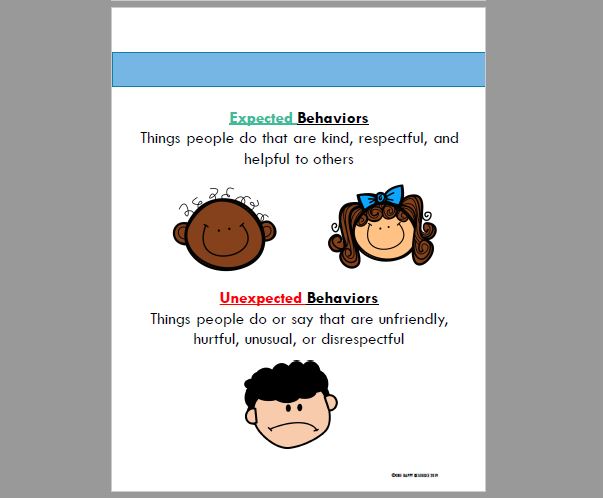
Stay away from the word “BAD”. As a special education teacher, one of the first valuable pieces of information I gained was to stay away from this word. It’s too easily interpreted as a defining word associated with a child's personality. I often hear parents say, “You’re a bad boy/girl” or “That’s bad!”, but rarely do you hear what the actual expectations are. Kids aren’t “bad”. Kids test boundaries to learn. Adults often assume the child is aware of what he or she is supposed to do but he or she may not know the expected behavior. It's our job to teach them expected behaviors through modeling and prompting. If you're interested to learn more about expected and unexpected behaviors, I have some fun teaching games and resources here: https://www.teacherspayteachers.com/Store/One-Happy-Resource



5. What important events were happening during the time you decided to write a letter?
This should include in-home (i.e. celebrations, birthdays, home additions, moving, etc.) and around the world events (i.e. COVID, current president, NASA, news etc.). It's also a great opportunity to include some sort of tangible item like a newspaper clipping or article.
6. Does my child know that I love them?
You can never say, “I love you” enough to your child. I use a lot of gushy words because that’s the kind of person I am. I also include statements like, “I am so proud of you because …” YOU DO YOU. Something to consider is your child’s “Love Languages”. There are several excellent resources out there to help you discover your child’s love language. Knowing that information can help guide you in your letters.


7. How does your voice sound throughout your letters?
Depending on your word choice, you can sound kind, aggressive, short, funny, mean, etc. Think about how you want to come across to your child. I go for more of a loving tone. I want my child to know how excited I am that I get to be his or her mom.
8. What are my child’s favorite things at the moment?
My second letter describes how Zoe loves to search for acorns on our walks. It’s a BIG DEAL. She grabs her little bucket and runs around until we are ready to go. Once she sees the acorns, she will grab one and hold it up toward the tree and say, “Uh-Oh” because she knows the acorn fell from the tree. That tidbit says a lot about her personality. She is able to draw a connection and realizes that this “poor tree” is missing something! She is both sensitive and intelligent. It is also interesting to see how her interests will impact her later on in life.
9. Do I want to include extra items in my letters?
I like crafts, photos, and anything sentimental so I include extra items. Some examples are pictures, drawings, paintings, a pressed petal or plant, receipts, ticket stubs, stickers, and anything else that can fit in the envelope without being crushed. They really don’t have to be anything fancy, but it is fun to include some pizazz to the letters. I imagine that one day Zoe will hold something that she and I held when she was a wee little thing. How special is that?!
10. What are some special moments or inside jokes that only you two understand?
Inside jokes are often developed between friends and family but can easily be forgotten as time goes on. Your child probably won’t remember the funny bonding moments you share together at a young age. Jot them down. Maybe it’s a funny look you give each other or a fun saying. It should be something special between just the two of you or your family.
Zoe likes to put her face really close to mine or her dad’s face when we are concentrating on completing a task. The other day, I was finishing up a quilt for her new “big girl” bed. She bent down, put her face up to mine, and looked at what I was looking at. Her face kept turning from me to the quilt. She then began to chuckle as if she was wondering what in the world I was looking at. I’m not sure what she thinks is funny, but her reaction is always humorous to Joe and me. Moments like that are part of our everyday experiences, but make life enjoyable.
I started this activity when Zoe was really young, but it can be implemented at any point in someone’s life. You could even write letters to your spouse, mom, dad, sister, best friend, etc. The possibilities are endless!
I plan on storing these letters in some sort of keepsake box and don’t plan on revealing these glorious treasures until the “right time” occurs. I’m not sure what that will look like yet but that’s the beauty of this- you can do whatever your heart desires!
Comment below with your creative ideas and thoughts regarding this activity. I would love to hear what you do for your children. This activity has really taught me how to appreciate the little moments with Zoe. I hope it inspires you to write letters to your children too.


Writing to your children is a great idea! I think it's something parents, or at least the mother, think about doing but they tend to put it off until they "have time". A little self-discipline in that area will be a great blessing for the child after the parents are gone.